Sold out
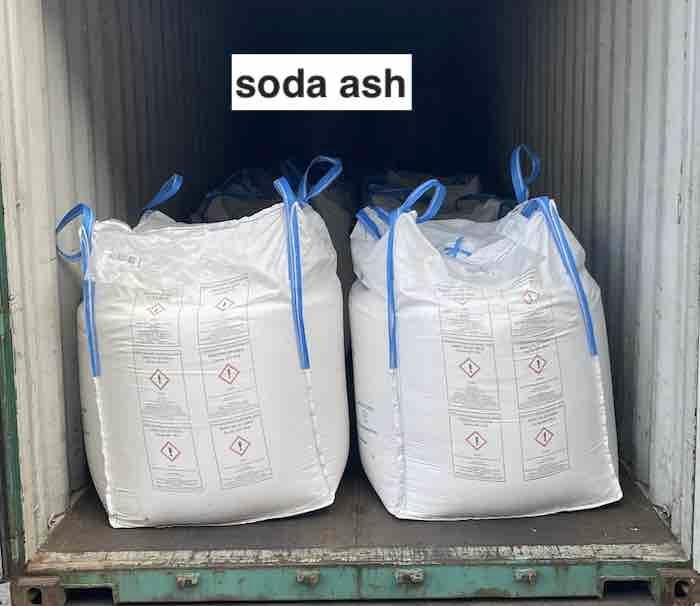

What is soda ash?
Soda ash is chemical raw material which is white in color odorless , tasteless and powder in shape . its known as Soda ash, diSoda ash, Washing Soda , soda crystal , Trona .
Why Choose Iran for Soda Ash Supply
Iran offers several advantages as a soda ash supplier:
Top Iran Soda Ash Suppliers
Several companies in Iran are recognized for their excellence in soda ash production and supply. These companies not only meet domestic demand but also cater to international markets, establishing themselves as reliable partners for businesses worldwide.The big player is ATDM CO LTD who has market share of Iran and neighbour countries.
General Manufacturing Information
Produced by the ammonia-soda or Solvay process, or from lake brines or sea water by electrolytic processes.For nearly a century, most of the soda ash produced in the U.S. has been made synthetically by the ammonia soda (Solvay) process. Largely because of high energy costs and strict pollution controls, most of the synthetic production is being abandoned in favor of the natural product obtained from deposits in Utah, California and Wyoming. One of the largest producing sites of the natural product is Green River, Wyoming.
Residual alkali
Traditional Solvay plants produce large volumes of aqueous, chloride-containing waste which must be discharged. Related environmental concerns are added whenever a plant complex includes lime quarries and ammonia-producing equipment. The natural soda ash processes produce no large volume of associated wastes. The major waste products are tailings, insoluble shale and minerals associated with trona and removed during processing. These solids along with purge liquors containing organic and trace impurities are sent to evaporation ponds where concentration of the
Soda ash grades
There are two type of soda ash , soda ash dense and soda ash light . The primary difference lies in their physical properties and applications:
Particle Size and Density
Applications of sodium carbonate
The light sodium carbonate is often preferred in applications where rapid dissolution and uniform distribution are important, such as in water treatment, chemical manufacturing, and certain detergent formulations.
Our dense sodium carbonate is typically used in applications where bulk density and ease of handling are critical factors, such as in glass manufacturing (especially for glass containers and flat glass), detergents, and certain chemical processes.
Soda ash use
generally Soda ash containing up to 99% sodium carbonate. it is used for the production of glass, soaps and detergents and other chemicals and it also used by the ‘metals and mining’ industry and the ‘pulp and paper’ industry. Soda ash is not only used by industry but is also used by consumers. It may be used directly in solutions of Soda ash for soaking of clothes, dishwashing, floor washing and for degreasing operations but it is also present in a large number of consumer products like cosmetics, soaps, scouring powders, soaking and washing powders.
Based on 2016 quarterly reports, the estimated distribution of soda ash by end use was glass, 50%; chemicals, 28%; distributors, 6%; soap and detergents, 6%; flue gas desulfurization, 4%; miscellaneous uses, 3%; water treatment, 2%; and pulp and paper, 1%.
aqueous stream is a first step in the eventual recovery of residual alkali.